Carlos Fernando CollaresMD, MSc, PhD

Physician · Neuroscientist · Psychometrician

Assessment that teaches. Curricula that breathe.

I help medical schools and education groups make academic decisions on evidence — from the exam to the curriculum, from faculty to leadership.

Consulting, faculty development, keynotes and mentoring. In English, Portuguese and Dutch — in Europe, Brazil and online.

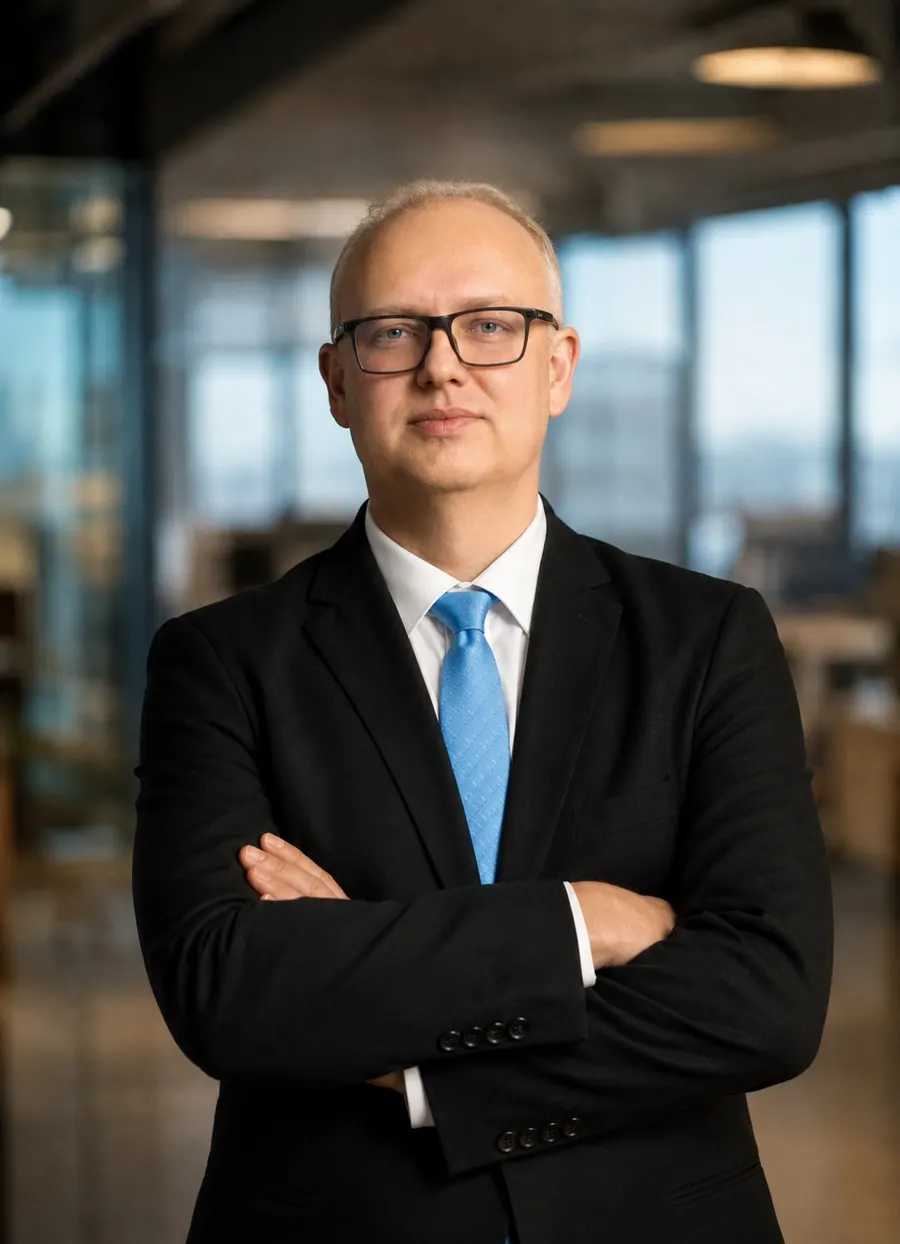
Portrait of Carlos Fernando Collares

Learning is like breathing. It takes both inspiration and expiration. For learning to happen, it is not enough for knowledge to go in. It also has to come out.

— Collares, 2025
−3 −2 −1 0 1 2 3 .5 1 P(correct) θ
Item characteristic curve: the probability of a correct answer as a function of θ, the proficiency every good assessment tries to estimate.

Try changing the angle of rotation: drag any of the graphs below.

2 8 14 20 1 2 3 4 0 0.5 1 stations raters Eρ² 0.80
Generalizability theory applied to OSCEs: the G coefficient grows with the number of stations and raters. The line marks 0.80.
0 2 3 −2 0 2 3 −2 0 6 θ₁ (memorization) θ₂ (application) I(θ)
Multidimensional IRT: test information across two proficiencies, θ₁ (memorization) and θ₂ (application). Where the surface rises, the test measures precisely.
Cognitive diagnostic modelling: each dot is a student, placed by their probability of mastering three attributes.

Built at

  • Maastricht University
  • European Board of Medical Assessors
  • University of Algarve
  • University of Minho · ICVS
  • Faculdades Pequeno Príncipe
  • Harvard Macy Institute
  • FACERES
  • Inspirali
10years

at Maastricht University's School of Health Professions Education

15medical schools

under his leadership of innovation and academic quality at a major Brazilian education group

1st

international computerised adaptive progress test, developed for EBMA

Who I work with

For the people who set the course of medical education

Medical education groups

Consistent quality across campuses without erasing each school's identity.

Deans and programme directors

Curriculum, assessment and indicators that hold up to accreditation, licensing exams and time.

Executives and founders

An independent technical read before investing in platforms, exams or curriculum reform.

Teachers and clinical supervisors

Practical training in teaching, assessment and clinical reasoning you can use the following week.

Governmental and non-governmental institutions

Assessment and research institutes, professional associations, licensing and accreditation bodies.

Services

How I can help

Assessment and psychometrics

Exams that measure what they claim to measure — and teach while they measure.

  • Technical audits of exams and item banks
  • Progress testing and data-driven licensing-exam preparation
  • Item response theory, computerised adaptive testing and cognitive diagnostic models
  • Programmatic assessment and standard setting
  • Results reporting and dashboards for leadership
  • Support for scientific work

Curriculum and innovation

Curricula that alternate learning and demonstrating — curricula that breathe.

  • Curriculum design and review against national standards
  • 4C/ID instructional design and entrustable professional activities (EPAs)
  • Methodological transitions: PBL, TBL and case-based collaborative learning (CBCL)
  • Generative AI in teaching and assessment
  • Academic quality and innovation systems

Faculty development

Teachers who teach and assess with method.

  • Faculty development and evaluation policies and programmes
  • Item-writing and review workshops, OSCE and mini-CEX
  • Teaching and assessing clinical reasoning
  • Learning science in the classroom
  • Feedback and student mentoring

Speaking and mentoring

Technical content, clear language, lasting effect.

  • Keynotes and opening lectures
  • One-to-one mentoring for programme directors, deans and founders
  • Mentoring in health professions education research
  • Advisory boards and examination committees

Formats: fixed-scope projects, ongoing advisory, on-site or online workshops.

Approach

How I work

Assessment of, for and as learning: the right exam does more than rank — it guides study, returns useful information and prepares for practice.

  1. Diagnosis

    I start from the data the institution already has — exams, grades, attrition, teaching evaluations. I measure before I propose.

  2. Design

    Solutions proportionate to the problem, grounded in the literature and compatible with how the school actually runs.

  3. Implementation

    I train the teams who will sustain the change, with materials and routines that stay in-house.

  4. Evidence

    Indicators agreed at the outset, so results can be shown to leadership, regulators and students.

Background

Clinic, neuroscience and measurement

I trained in medicine at the Federal University of Santa Catarina, hold a master's in Neuroscience and Behaviour from the University of São Paulo and a PhD in Psychological Assessment from São Francisco University. I began in clinical toxicology and have worked in medical education since 2007 — first as a teacher and coordinator in Brazil, then for ten years at Maastricht University's School of Health Professions Education in the Netherlands, where I coordinated the International Progress Test.

As assessment specialist at the European Board of Medical Assessors, I developed the first international computerised adaptive progress test and advised institutions across Europe, the Middle East and Latin America. Most recently I led Innovation and Academic Quality at one of Brazil's largest private medical education groups, with 15 medical schools.

I am currently Invited Associate Professor at the University of Algarve, researcher at the University of Minho's ICVS and faculty member of the Graduate Program (Master's) in Teaching in the Health Sciences — Programa de Pós-Graduação Stricto Sensu (Mestrado) de Ensino nas Ciências da Saúde — at Faculdades Pequeno Príncipe. I serve as an editor for BMC Medical Education and CERES, and in 2026 completed the Harvard Macy Institute's Leading Innovation in Health Care and Education programme.

Education
MD (Federal University of Santa Catarina) · MSc Neuroscience and Behaviour (University of São Paulo) · PhD Psychological Assessment (São Francisco University)
Affiliations
University of Algarve · University of Minho (ICVS) · European Board of Medical Assessors · Faculdades Pequeno Príncipe
Editorial
BMC Medical Education · CERES
Recognition
AMEE Research Paper Award (2017) · Finalist, IMU–Ron Harden Innovation in Medical Education Award (2012)
Volunteering
WHO Academy — assessment working group (2020–2022) · Founder, Stichting Aphasia.help
Languages
Portuguese · English · Dutch

Outside medical education, I write fiction as C.F. Collares. Books on Amazon ↗
Speaking

Keynotes and workshops

For conferences, opening lectures and academic leadership meetings: evidence-based content, delivered so that it travels home with the audience.

Carlos Fernando Collares presenting “Becoming Excellent” at AMEE 2026 in Vienna
AMEE 2026, Vienna — “Becoming Excellent”: principles for cultivating professional identity formation.
Carlos Fernando Collares speaking at a lectern at a conference
Carlos Fernando Collares presenting at a lectern
Panel discussion on stage with Carlos Fernando Collares and other guests
Carlos Fernando Collares answering questions on stage

Frequent topics

  • Programmatic assessment: fostering learning and competence development
  • Portfolio and mentoring: effective implementation
  • Generative AI and clinical reasoning: teaching to think in the age of algorithms
  • Excellence in medical training: evidence-based principles
  • Professional identity and professionalism
  • Learning science: how to study — and teach — better
  • Progress testing
  • Curricula that breathe: alternating input and output in learning
  • Blueprinting
  • Item writing and review
  • Principles of effective feedback
  • Faculty development and evaluation policy
  • Leadership in innovation
  • Educational innovation with academic responsibility
  • Item response theory
  • Computerized adaptive testing
  • Cognitive diagnostic modelling
  • Learning analytics
  • Generalizability theory applied to OSCEs
Get in touch

Publications

Selected publications

Research on assessment, psychometrics and learning, published in journals including Medical Education, Medical Teacher, Advances in Health Sciences Education and BMC Medical Education.

Régua · open resource

64 apps for learning to analyse data

An open, free learning tool for anyone who wants to learn statistics, psychometrics, learning analytics, epidemiology and evidence-based medicine — including meta-analysis and survival analysis. Each interactive app shows, in practice, what a method does and how to interpret its results.

  • 16

    Statistics

    From descriptive statistics to regression, ANOVA, generalised linear models and Bayesian statistics.

  • 24

    Psychometrics

    Validity evidence, IRT, generalizability theory, many-facet Rasch, factor analysis, cognitive diagnostic modelling and adaptive testing.

  • 20

    Learning analytics

    From logs to variables: machine learning, sequence analysis, networks, process mining, explainable AI and ethics.

  • 4

    Special topics

    Epidemiology, evidence-based medicine, meta-analysis and survival analysis.

Contact

Let's talk

Tell me briefly about your institution and what you would like to achieve. I reply personally.

Balneário Camboriú, SC, BrazilOn site in Brazil and Europe; online anywhere.